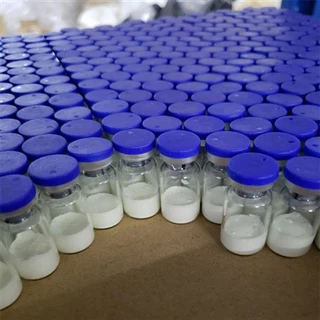
Lipolytic Precision: Sourcing AOD-9604 Online in 2026In the landscape of metabolic research, the ultimate goal has always been separation of effects. For decades, scientists studied Human Growth Hormone (hGH) for its profound ability to reduce adipose tissue, but were constantly limited by its concurrent systemic side effects—namely, insulin resistance and unwanted cellular proliferation.Enter AOD-9604 (Advanced Obesity Drug). This highly specialized peptide represents a milestone in molecular engineering: a targeted fragment of the native growth hormone molecule that isolates its fat-burning power while completely bypassing its systemic hormonal drawbacks.
AOD-9604 is a synthetic cyclic peptide representing the C-terminal fragment (amino acids 177–191) of human growth hormone, modified with an additional tyrosine residue at the N-terminus for structural stability. Its primary mechanism of action is the selective upregulation of lipolysis (fat breakdown) and the inhibition of lipogenesis (fat storage) via a non-somatotropic pathway that does not impact IGF-1 levels or blood glucose. In 2026, sourcing high-purity ($ge$ 99.0%) lyophilized AOD-9604 requires strict third-party verification to confirm the integrity of its essential disulfide bond.1. The Isolated Fragment Mechanism: All Burn, No BloatTo understand why researchers choose to buy AOD-9604 over standard hGH or secretagogues like CJC-1295, you have to look at the exact anatomy of the growth hormone chain.The native hGH molecule is a complex 191-amino acid structure. Scientists discovered that different sections of this chain are responsible for different biological jobs:The N-Terminus (Anabolic Domain): Drives systemic IGF-1 release, bone growth, cartilage proliferation, and unfortunately, insulin resistance.The C-Terminus (Lipolytic Domain): Houses the specific region responsible for modulating fat metabolism.AOD-9604 isolates amino acids 177–191. By clipping this fragment and cyclizing it, the more info peptide replicates hGH's high-affinity interaction with adipocyte (fat cell) beta-adrenergic receptors. It forces the cell to release stored fatty acids without triggering the pituitary or liver cascades that cause fluid retention, joint pain, or glucose intolerance.2. Navigating the 2026 Sourcing LandscapeWhen looking to buy AOD-9604 online, procurement agents and researchers must navigate a market that has shifted heavily toward independent, third-party verified supply chains.Technical MetricAnalytical Standard (RUO)The Risk of Substandard SourcingPurity Level$ge$ 99.0% via HPLCResidual synthesis fragments can cause immunogenic injection site reactions.Molecular Weight$approx$ 1815.1 DaIncorrect mass indicates failure to attach the stabilizing Tyrosine residue.Disulfide BridgeFully Oxidized / CyclicLinear (un-cyclic) variations degrade rapidly and lose receptor affinity.Physical StateLyophilized White CakeLiquid variants sold pre-mixed suffer from rapid peptide cleavage.3. The Structural Litmus Test: Verifying the Disulfide LoopThe raw synthesis of the 177-191 fragment leaves the peptide chain linear. To transform it into true, biologically active AOD-9604, the laboratory must perform a precise oxidation step to form a disulfide bridge between the two cysteine residues in the chain.This cyclic ring structure is what grants the peptide its resistance to rapid enzymatic breakdown in biological assays. When evaluating an online vendor's Certificate of Analysis (COA), the High-Performance Liquid Chromatography (HPLC) graph must show a single, sharp, symmetric peak. A broad or split peak indicates a mixture of linear and cyclic forms, which represents an unrefined, low-tier synthesis process.4. Reconstitution and Experimental StabilityAOD-9604 is a highly stable fragment compared to full-length proteins, but it still demands exact laboratory handling to maintain its molecular architecture over a testing cycle.Diluent Matrix: Reconstitute exclusively using USP-grade Bacteriostatic Water (0.9% Benzyl Alcohol) to establish a sterile environment for multi-dose testing.The Reconstitution Ratio: A standard laboratory protocol involves adding 2mL of BAC water to a 5mg vial, yielding a highly manageable concentration of 2.5mg/mL (or 250mcg per 0.1mL).Thermal Constraints: While the lyophilized powder can tolerate room temperature shipping, it should be stored at -20°C upon receipt. Once reconstituted, the liquid matrix must be stored immediately at 2°C to 8°C and utilized within 28 days.The Verdict: Demand Analytical Data, Not HypeSourcing AOD-9604 online in 2026 requires moving past generic fitness marketing and auditing the hard biochemistry of your supplier. Because its metabolic efficacy depends entirely on the correct cyclization of the 177-191 fragment, buying from transparent vendors who provide batch-specific mass spectrometry data is the only way to protect the validity of your research.